Why Data Centers Are Reshaping North Texas Real Estate Markets
The hum is constant now in parts of North Texas, not traffic, not construction, but the industrial drone of cooling systems running 24/7 behind chain-link and concrete. Data centers have arrived in force across McKinney, Frisco, and the surrounding communities, and they're changing the conversation I have with buyers every week. You've probably heard about the tech boom bringing jobs and investment to DFW, but what you might not expect is how these massive facilities are affecting everything from your commute to your property taxes to the quiet you thought you were buying when you moved here.
This isn’t about whether data centers are good or bad. It’s about what they could mean for homebuyers. Maybe someone is trying to decide between McKinney and Frisco, or they’ve found the perfect lot only to discover that a warehouse-sized building is planned right next door.
The reality is more complicated than the headlines suggest. Understanding where data centers are being built, how they may affect nearby communities, and what to look for can help buyers make a more informed decision before making an offer.
Data centers are infrastructure, not the kind of development that brings retail or restaurants or the walkable energy that makes a neighborhood feel alive. They're essential to the digital economy, but they don't interact with residential areas the way an office park or shopping center does. That creates a specific set of trade-offs, and those trade-offs are playing out differently depending on where you're looking in North Texas.
Table of Contents
What Data Centers Mean for North Texas Buyers
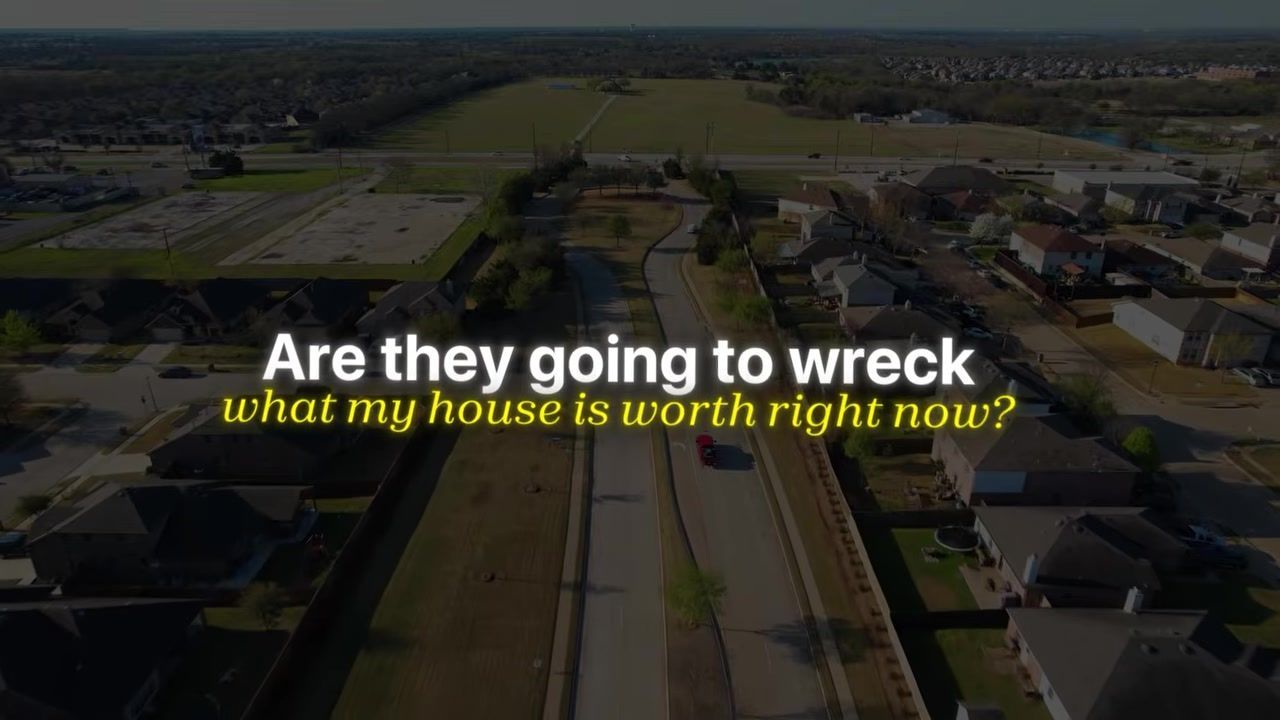
Data centers are enormous. We're talking hundreds of thousands of square feet, sometimes more than a million, with cooling towers, backup generators, and security fencing that makes them look more like utility plants than office buildings. They're going up fast across North Texas because the region offers cheap land, access to power, and proximity to fiber networks. For tech companies, this is prime real estate. For homebuyers, it's a new variable in the equation.
The appeal is straightforward: data centers pay property taxes, and they pay a lot of them. A single facility can contribute millions of dollars annually to a city's budget, which theoretically means better roads, schools, and services without raising residential tax rates. That's the pitch, and it's not wrong. But it's also not the whole story.
What data centers don't do is create the kind of daytime population that supports local businesses. They employ relatively few people compared to their footprint, maybe a few dozen full-time staff for a facility that covers 50 acres. There's no lunch crowd, no after-work happy hour, no foot traffic. If you're buying in an area where data centers are replacing mixed-use development or retail space, you're trading tax revenue for the kind of walkable, vibrant community energy that a lot of buyers moving here are looking for.
The other issue is aesthetic and experiential. These buildings are functional, not designed to blend into residential neighborhoods. If you're looking at a home and there's a data center planned within a mile or two, you need to think about what that means for your view, your noise level, and your sense of place. Some buyers don't care. Others find out too late that the constant hum or the floodlights at night are deal-breakers.
How Data Centers Affect Property Values and Neighborhood Character
This is the question I get most often: will a data center near my house hurt resale value? The honest answer is that it depends on proximity, visibility, and what the buyer pool looks like when you're ready to sell.
If the data center is a mile away and tucked behind commercial zoning, most buyers won't notice or care. If it's across the street, or if your backyard looks out at cooling towers and security lighting, that's a different conversation. I've seen homes sit longer on the market when the listing photos can't hide the industrial backdrop, and I've seen buyers walk away during showings because the noise was more intrusive than they expected.
The tax revenue argument doesn't always translate to higher home values, either. Yes, the city benefits, but individual homeowners don't see a direct reduction in their tax bills. What they do see is increased traffic during construction, potential strain on local infrastructure, and a shift in the character of the area. If you bought in a neighborhood expecting it to stay residential or to transition into mixed-use retail and dining, a data center changes that trajectory.
There's also the question of future development. Data centers tend to cluster, once one goes in, others follow because the infrastructure is already in place. If you're buying in an area with one data center, ask what's zoned around it. You might be looking at two or three more in the next five years.
Infrastructure Strain: Roads, Power, and Water
Data centers are power-hungry and water-intensive. Cooling systems run constantly, and that puts pressure on local utilities in ways that residential development doesn't. In some parts of North Texas, that's leading to concerns about water availability during droughts and about whether the electrical grid can handle the load during peak summer months.
For buyers, this matters because infrastructure strain can mean longer wait times for new residential development to get utility hookups, or it can mean higher fees as cities scramble to upgrade capacity. I've had buyers surprised by special assessments or impact fees in areas where data centers are driving rapid growth, and those costs add up.
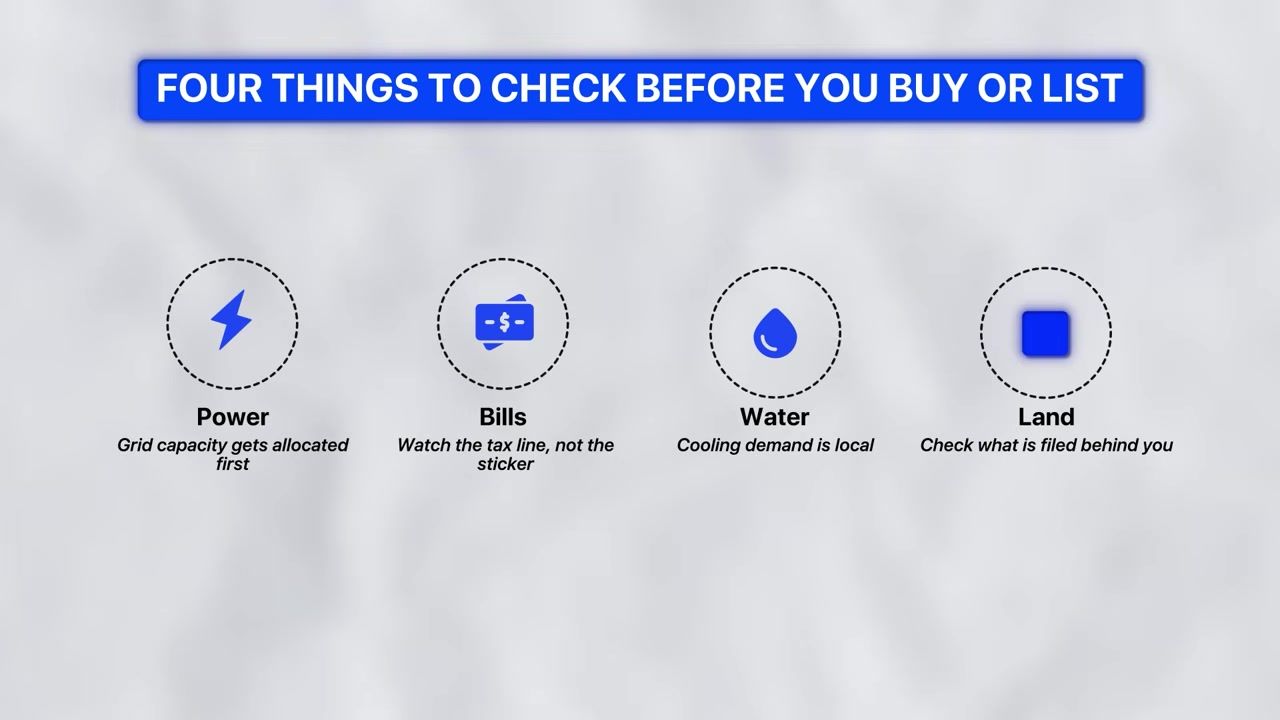
Roads are another pressure point. Data centers generate heavy truck traffic during construction, concrete mixers, equipment haulers, delivery trucks running for months. If you're living nearby during that phase, expect delays, noise, and wear on local streets. Once the facility is operational, traffic drops off, but the construction phase can be disruptive in a way that's hard to anticipate if you're not familiar with the timeline.
Which North Texas Cities Are Most Affected
McKinney and Frisco are seeing significant data center development, along with other cities in Collin County and parts of Denton County. The pattern tends to follow major highways and areas with available land that's still close to fiber infrastructure. If you're looking at homes near US-380, the Dallas North Tollway, or SH-121, you're in the zone where data centers are most likely to appear.
Each city is handling the influx differently. Some are embracing the tax revenue and approving projects quickly. Others are starting to add restrictions on where data centers can be built and how close they can be to residential areas. If you're serious about a specific neighborhood, check with the city's planning department to see what's zoned nearby and what's in the pipeline. That information is public, and it's worth the phone call.
What to Ask Before You Buy Near a Data Center
If you're looking at a home and you know there's a data center nearby, or if you're not sure, here's what I recommend asking:
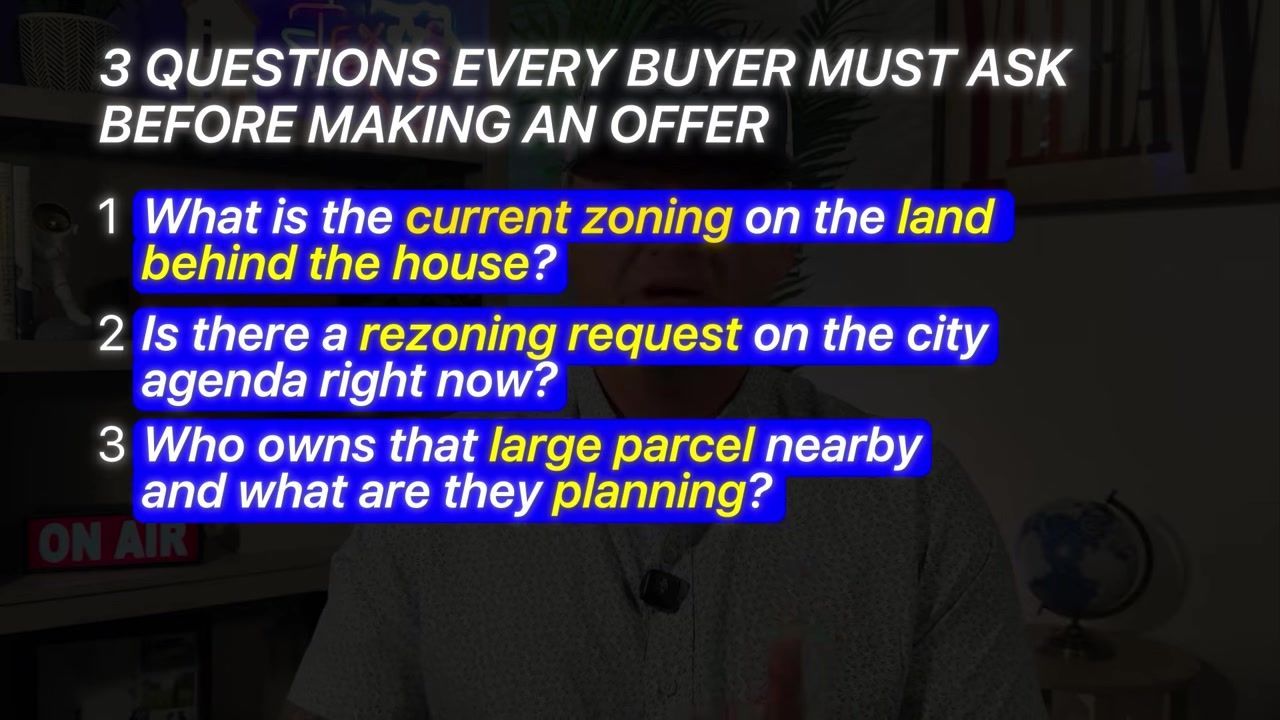
- How close is it, and what's between you and the facility? Distance matters, but so does buffering. A data center behind a commercial strip or a tree line is different from one with direct line of sight.
- What's the noise level? Visit the property at different times of day, including evening and early morning. Cooling systems run constantly, and some are louder than others.
- What else is zoned for data centers in the area? One facility might be fine. Three or four changes the equation.
- How is the city managing infrastructure? Ask about road projects, utility upgrades, and whether there are any special assessments planned for the area.
- What's the resale outlook? Talk to a local agent (like me) about how similar homes have performed when they're near industrial or data center development.
These aren't deal-breakers for every buyer, but they're factors that deserve honest conversation before you make an offer.
Conclusion
Data centers are part of North Texas now, and they're not going away. They bring tax revenue and infrastructure investment, but they also bring trade-offs that affect how neighborhoods feel and how homes perform on the resale market. If you're relocating here, the key is to go in with your eyes open, know what's nearby, understand the zoning, and think about whether the trade-offs align with what you're looking for in a home and a community.
Connor works with buyers navigating these decisions every week and can help them understand what’s happening in the specific areas they’re considering. Whether it’s McKinney, Frisco, or another part of North Texas, he can help buyers figure out what makes the most sense for their situation.
To learn more or discuss a specific area, book a call or text at 214-326-2323, to help you work through the options.
FAQ
What exactly is a data center and why are they being built in North Texas?
A data center is a large facility that houses servers and computing equipment for cloud storage, internet services, and digital infrastructure. North Texas is attractive because of available land, access to power and fiber networks, and proximity to major metro areas. These facilities are essential to the digital economy but require massive amounts of space and energy.
Will a nearby data center lower my home's value?
It depends on proximity and visibility. Homes with direct views of data centers or significant noise exposure tend to sit longer on the market and may sell for less. Homes farther away with buffering (commercial zones, trees, distance) typically see little to no impact. Resale depends on the buyer pool and how the area develops over time.
Do data centers create jobs in the community?
Data centers employ relatively few people compared to their size, often just a few dozen full-time staff for a facility covering 50+ acres. They don't generate the kind of daytime population that supports local restaurants, retail, or services the way an office park or mixed-use development would.
How can I find out if more data centers are planned near a home I'm considering?
Check with the city's planning or zoning department. They maintain public records of approved projects and zoning designations. You can also ask your real estate agent to research what's in the pipeline for the area. This information is available, and it's worth reviewing before you make an offer.
Are there any benefits to living near a data center?
The main benefit is the property tax revenue they generate, which can fund city services, schools, and infrastructure without raising residential tax rates. Some buyers also appreciate that data centers are low-traffic once operational, unlike retail or office developments. The trade-off is the lack of walkable amenities and the industrial character of the facilities.
Should I avoid buying in areas with data center development?
Not necessarily. It depends on your priorities and how close the facility is to the home you're considering. If you value quiet, views, and a residential feel, proximity matters. If you're focused on tax base and don't mind industrial neighbors, it might not be an issue. The key is to visit the property, understand the zoning, and make an informed decision based on your lifestyle and resale goals.
Connor Hornsby - North Texas Living
Connor Hornsby, CEO of North Texas Living. With nearly a decade in real estate, I guide buyers, sellers, and investors across North Texas with a client-first focus. Let’s achieve your property goals.

Recent Posts